Moelleria costulata
Taxon version key
[NBNSYS0000184296]
Sort order
610
Taxonomic group
Marine snail

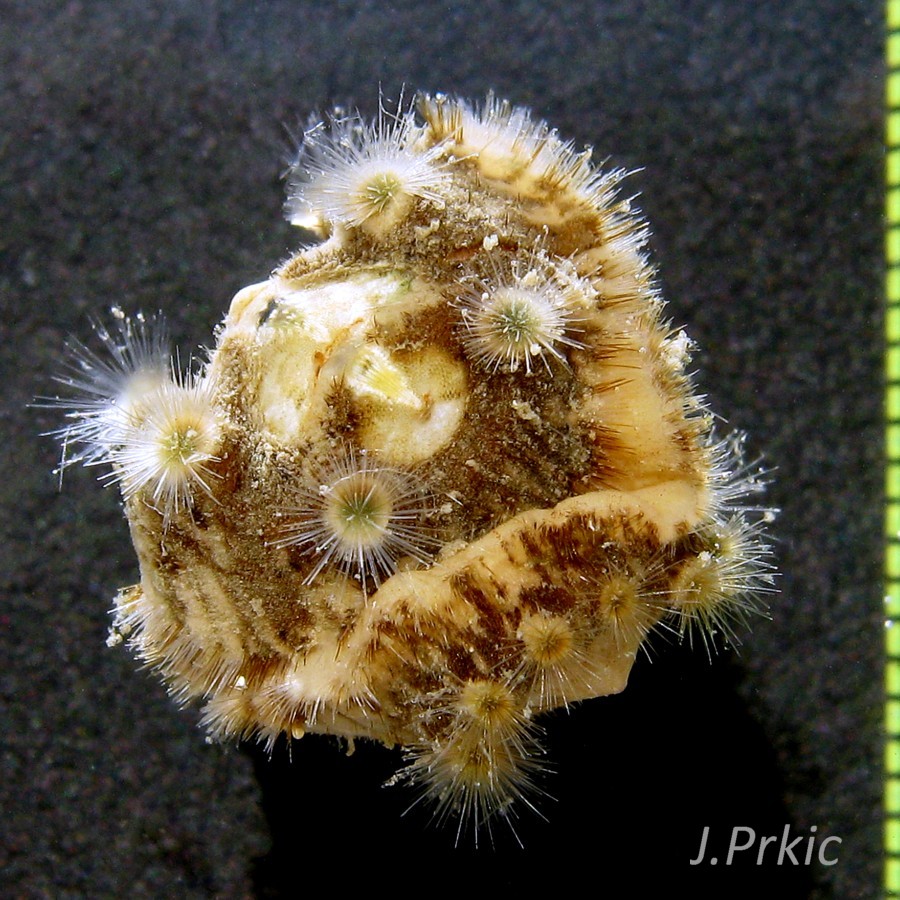
A southern species occurring from the south of the British Isles to the Mediterranean Sea, the Black Sea, the Azores and the Canary Islands. It is a relatively uncommon species in Britain whose distribution is still poorly understood.
The map provided here shows the distribution of the species based on Conchological Society data held by the National Biodiversity Network (NBN). See terms and conditions.
The following datasets are included:
Open an NBN Atlas interactive map of this data in a new window.
Lives on the underside of rocks and boulders usually lightly embedded in sand or gravel. When displaced from substrate, can roll into a ball [4]. It feeds by grazing material from the rock surface using its radula. Most common in the low shore or shallow subtidal areas but can occur to a depth of 70m.
Taxon details available from MolluscaBase (AphiaID 138677):
Acanthochitona fascicularis (Linnaeus, 1767)
The UK NBN Atlas entry for the species can be accessed via this link.
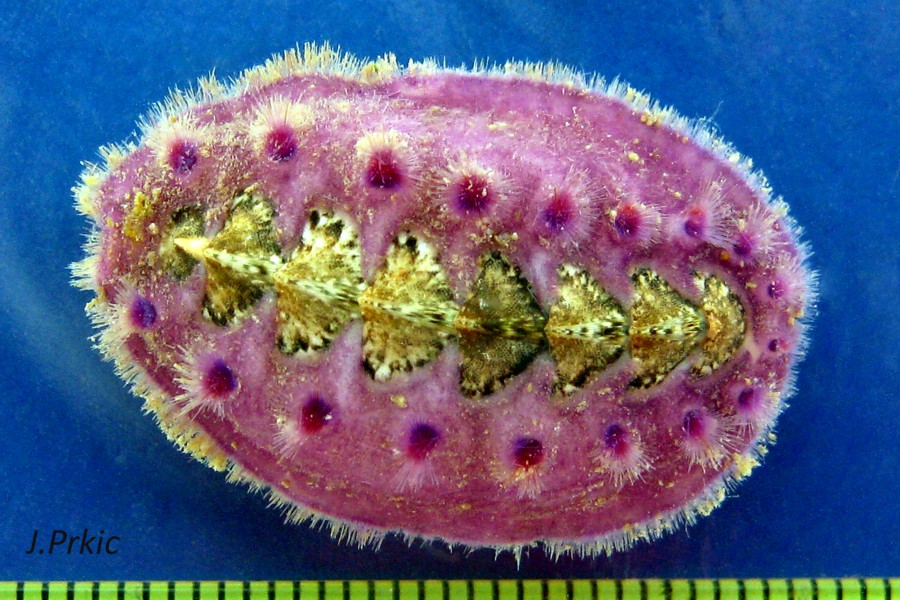
Size: Up to about 60mm long - Britain's largest chiton. Shape: Very broad girdle with the shell making up 30-40% of the width.
Occurs from Norway to the Mediterranean and Adriatic seas [GBIF map]. It is found all around the coasts of Britain and Ireland and is not uncommon. While it sometimes occurs in very high densities it more generally found in relatively low numbers.
The map provided here shows the distribution of the species based on Conchological Society data held by the National Biodiversity Network (NBN). See terms and conditions.
The following datasets are included:
Open an NBN Atlas interactive map of this data in a new window.
Lives on the underside of rocks and boulders usually lightly embedded in sand or gravel. It feeds by grazing material from the rock surface using its radula. Most common in the low shore or shallow subtidal areas but can occur to a depth of 50m.
Taxon details available from MolluscaBase (AphiaID 138675):
Acanthochitona crinita (Pennant, 1777)
The UK NBN Atlas entry for the species can be accessed via this link.
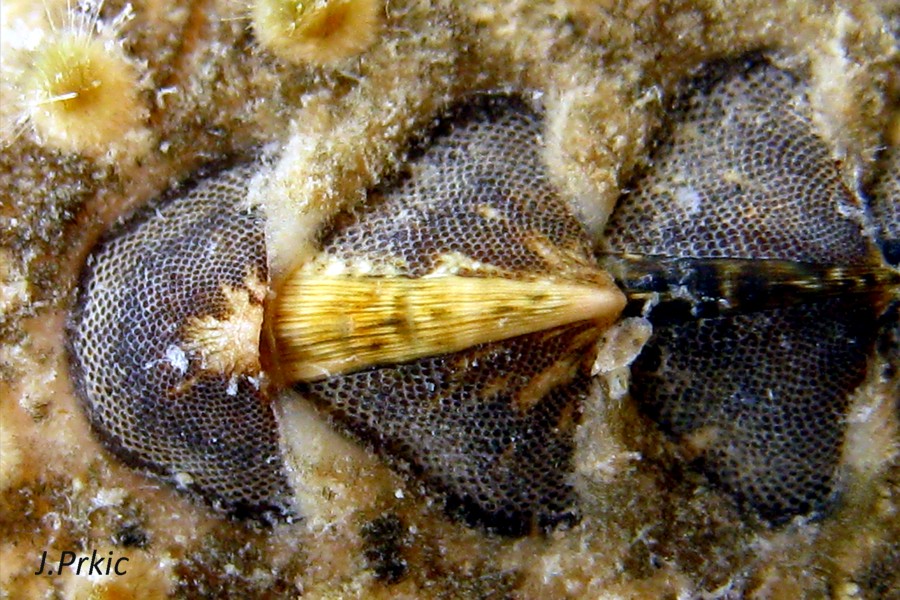
Size: Up to about 34mm long. Shape: Very broad girdle with the shell making up 40-50% of the width. Valves are relatively flat, with a very slight keel.