Report of the Conchological Society Review Meeting - November 2007
Issue
13
Page
18
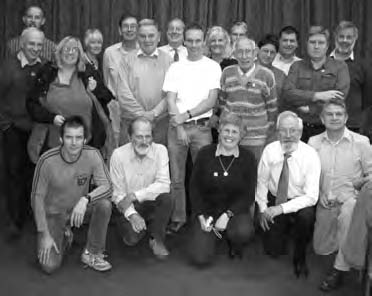 On 11th November, a special Council meeting of the Society was h

On 11th November, a special Council meeting of the Society was h
The Solenogasres are a small class of shell-less molluscs which gnerally live on the surface of cnidarians such as hydroids and corals. In some cases the species a particular species of Solenogastres is associated with appears to be very specific. They are an entirely marine group occuring to considerable depths but rarely found in water less than 20m deep.
The Caudofoveata are a relatively obscure class of mollusc and for a long time they were not even recognised as molluscs at all. They are exclusively marine and are found at depths of more than 20m burrowed in muddy sediments. Relatively little is known about them as little work has been done on live animals. They are generally only picked up in dredge or grab samples which have been preserved. They live in burrows formed by pushing the head down through the sediment by a series of muscular contractions and expansions.
The Polypacophora - colloquially known as chitons (pronounced kite-ons) or Coat of mail shells - are some of the more unusual looking of the molluscs. They have eight shell plates embedded in the mantle and surrounded by a fleshy girdle. They possess a muscular foot (identical to that found in Gastropods) which is used to attach the animal and move around. They live attached to rocks, the eight shells allowing the animal to move across relatively uneven surfaces. If dislodged it can roll into a ball for protection.
The Scaphopods or "Tusk shells" are an unusual group of molluscs that are rarely found alive - except by divers or dredging - but often the empty shells are washed up on the shore. The curved shell (shaped like an elephants tusk - hence the colloquial name) is open an both ends and they live buried in sediment with then thinner end of the shell projecting in to the water. Evidence from fossils shows that the group first evolved in the Devonian period - some 400 million years ago. They burrow into the sediment using a muscualr foot very similar to that found in bivalves.
A separate article by Julia Nunn reports on the Review Meeting of the Conchological Society that took place on 11th November 2006.
Members of the Conchogical Society are invited to attend for any part of the trip or for the entire excursion.
On 15th November 2006 I visited the South Forty Foot Drain at Swineshead Bridge, Lincolnshire (TF218429) to collect an invertebrate sample for the Environment Agency’s biological monitoring p
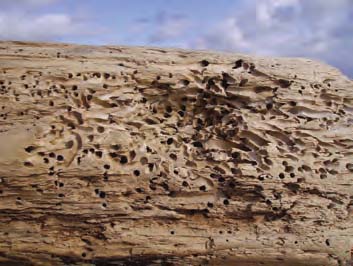 On 4th October 2006, I was surveying a remote, 21/2 miles long stretch of sandy/st
During June 2006, it was reported that there was a five mile long oil slick in the Menai Strait and some members who attended the Anglesey field meeting to this area in April 2006, have expressed s