Distribution and status
A southern species occurring from the south of the British Isles to the Mediterranean Sea, the Black Sea, the Azores and the Canary Islands. It is a relatively uncommon species in Britain whose distribution is still poorly understood.
Acanthochitona fascicularis
The map provided here shows the distribution of the species based on Conchological Society data held by the National Biodiversity Network (NBN). See terms and conditions.
The following datasets are included:
- Conchological Society of Great Britain & Ireland: marine mollusc records
Open an NBN Atlas interactive map of this data in a new window.
Ecology and behaviour
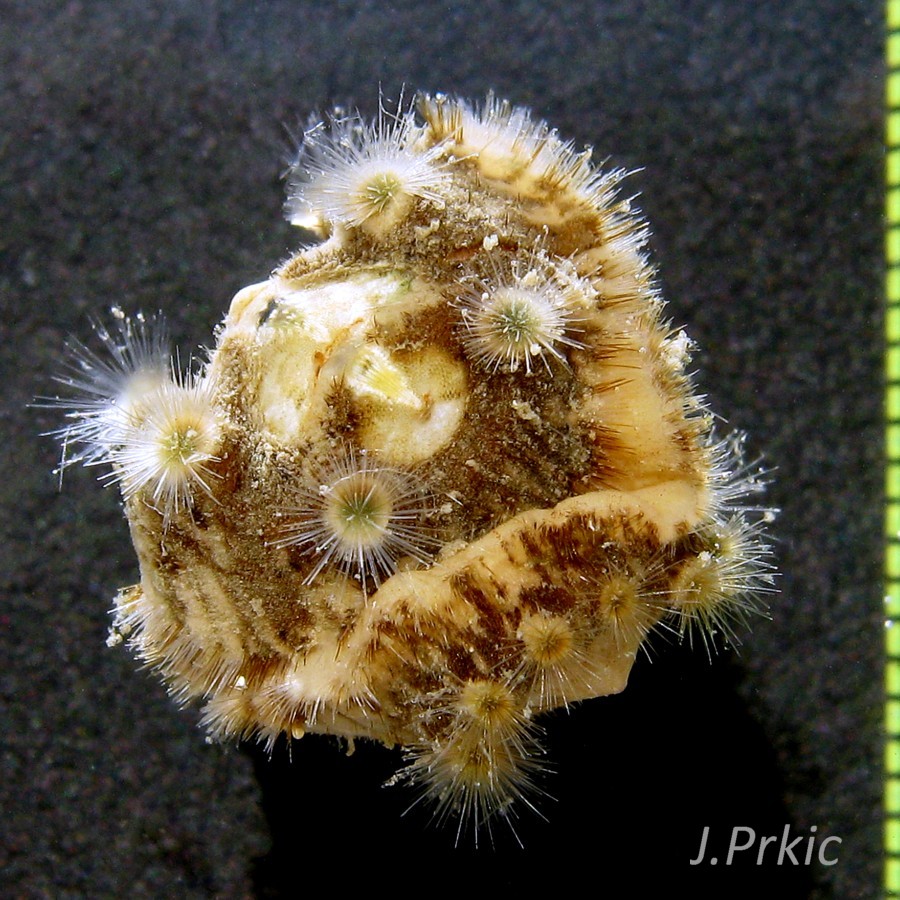
Lives on the underside of rocks and boulders usually lightly embedded in sand or gravel. When displaced from substrate, can roll into a ball [4]. It feeds by grazing material from the rock surface using its radula. Most common in the low shore or shallow subtidal areas but can occur to a depth of 70m.
Key identification features
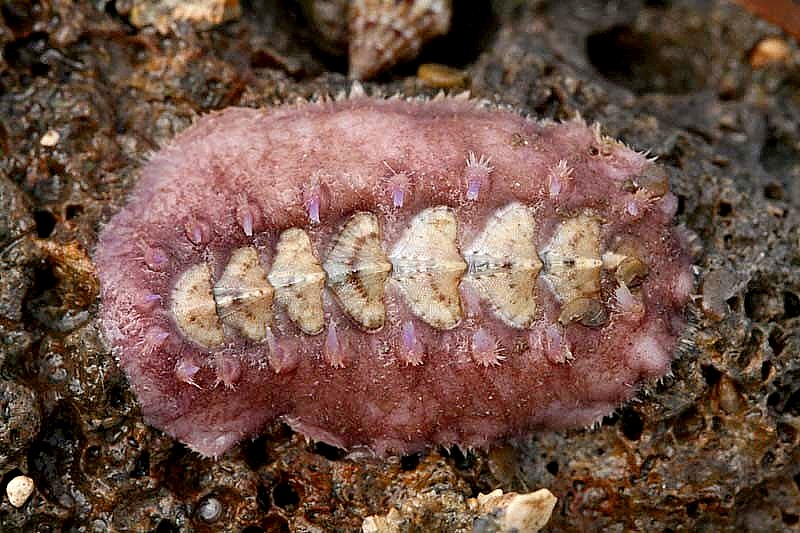
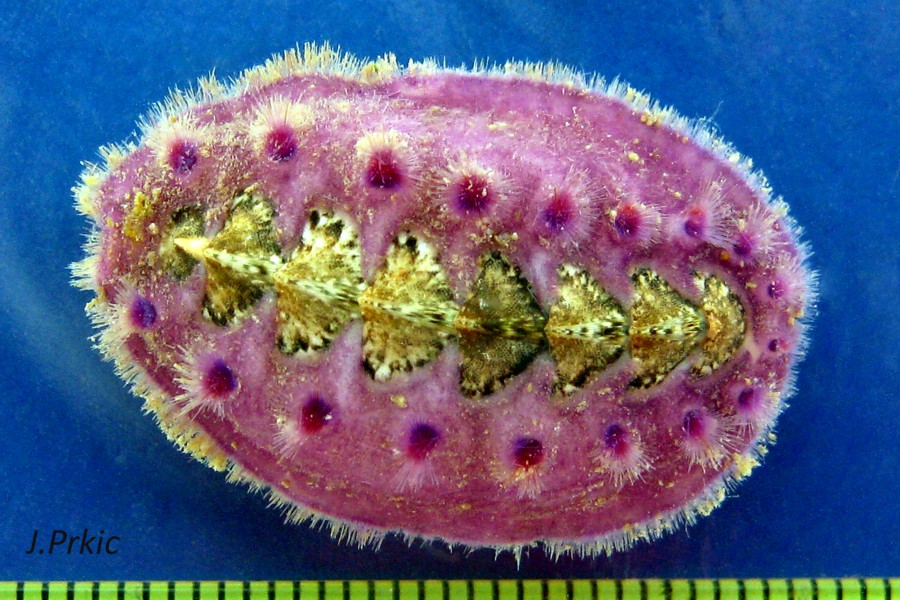
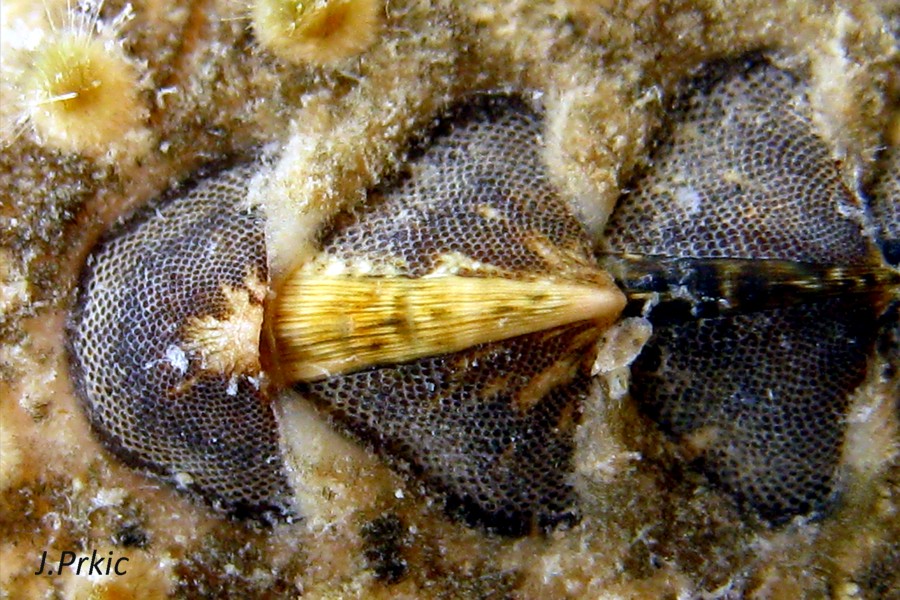
- Wide girdle with eighteen conspicuous tufts of colourless bristles.[5]
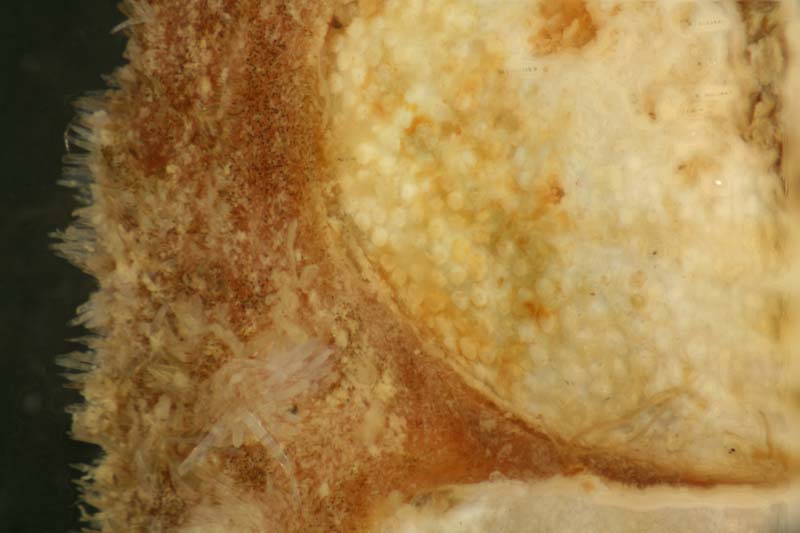
- Tightly packed round granules on the valve surfaces [6]
Size: Up to about 60mm long - Britain's largest chiton. Shape: Very broad girdle with the shell making up 30-40% of the width.