
These pages are designed to help you get started with the identification of some British and Irish species of mollusc.
By reading the text beside an image and clicking on the image which is most like your specimen, you should arrive at the name of the species with a description and image of it. In some cases you will only arrive at an aggregate of species because further identification would require dissection. This is particularly true of terrestrial slugs because external features are not distinct enough to make a decision.
Should you arrive at a description which does not match your specimen, use the 'bread-crumb trail' at the top of the page below the main menu in order to go back and try again.
At the present time the only groups covered are as below. It is hoped to extend the section as soon as appropiate keys are written and images are available. If you can help by writing a key, please contact
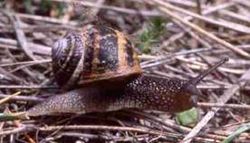
This Garden Snail will take you to pages to help with the identification of garden molluscs found in Great Britain and Ireland
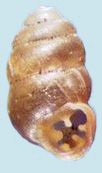
The image to the right will take you to pages to help with the identification of British and Irish species of the family Vertiginidae.
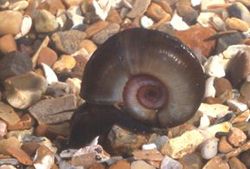
This Pond Snail will take you to pages which will help you to identify species of freshwater and brackish-water snails found in Great Britain and Ireland.
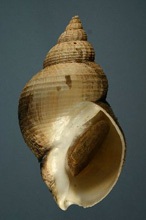
This image of Buccinum undatum will lead you to a key to larger species of marine snails which live on rocky shores around the British Isles. The key is included in 'Rocky shore snails as material for projects' by Dr. J. H. Crothers, published by Field Studies Council, in Field Studies Volume 10, 601–634 (2003).
You will need a copy of Adobe Acrobat Reader to read the paper. If you do not have a copy, it is available as a free download by clicking on this logo.
